




2026 is here — what kind of therapist do you want to become?
As we enter 2026, Phase 3 studies of psychedelic therapies for conditions like anxiety, depression, PTSD, and related mental health indications are underway or in active planning. Each month, more clinicians are finding their way into this emerging field. Lately, I’ve been reflecting on what makes this moment so compelling — and on how therapists can bring the depth of their existing training, judgment, and care into this next chapter of practice.
At Fluence, we see psychedelic therapies as fundamentally compatible with a wide range of therapeutic orientations. That belief has shaped our programs from the beginning. Rather than asking clinicians to abandon what they already know, our approach focuses on building competencies and skills that integrate with your existing clinical identity. Training in psychedelic therapy is about expanding what you already do well so you can thoughtfully and responsibly work with these tools as they become available.
We’re often asked how best to prepare for the FDA approvals of psychedelics that many in the field anticipate beginning in late 2026 or early 2027. While timelines for psilocybin, MDMA, and other drugs remain uncertain, approvals would be followed by DEA scheduling, which could introduce additional delays before prescription access becomes widespread. Still, there are meaningful steps you can take now to prepare.
Start with foundational education.
If you haven’t yet taken any continuing education in this area, beginning with a few hours of on-demand learning is a practical first step. At Fluence, we offer courses as short as one hour. Our Introduction to Psychedelic Therapy course provides a comprehensive orientation to the field and also counts as credit toward the next stage of our training pathway. After completing it, you can choose to list yourself in our Directory and begin signaling your professional interest in this work.
From there, it can be helpful to ask yourself a deeper question:
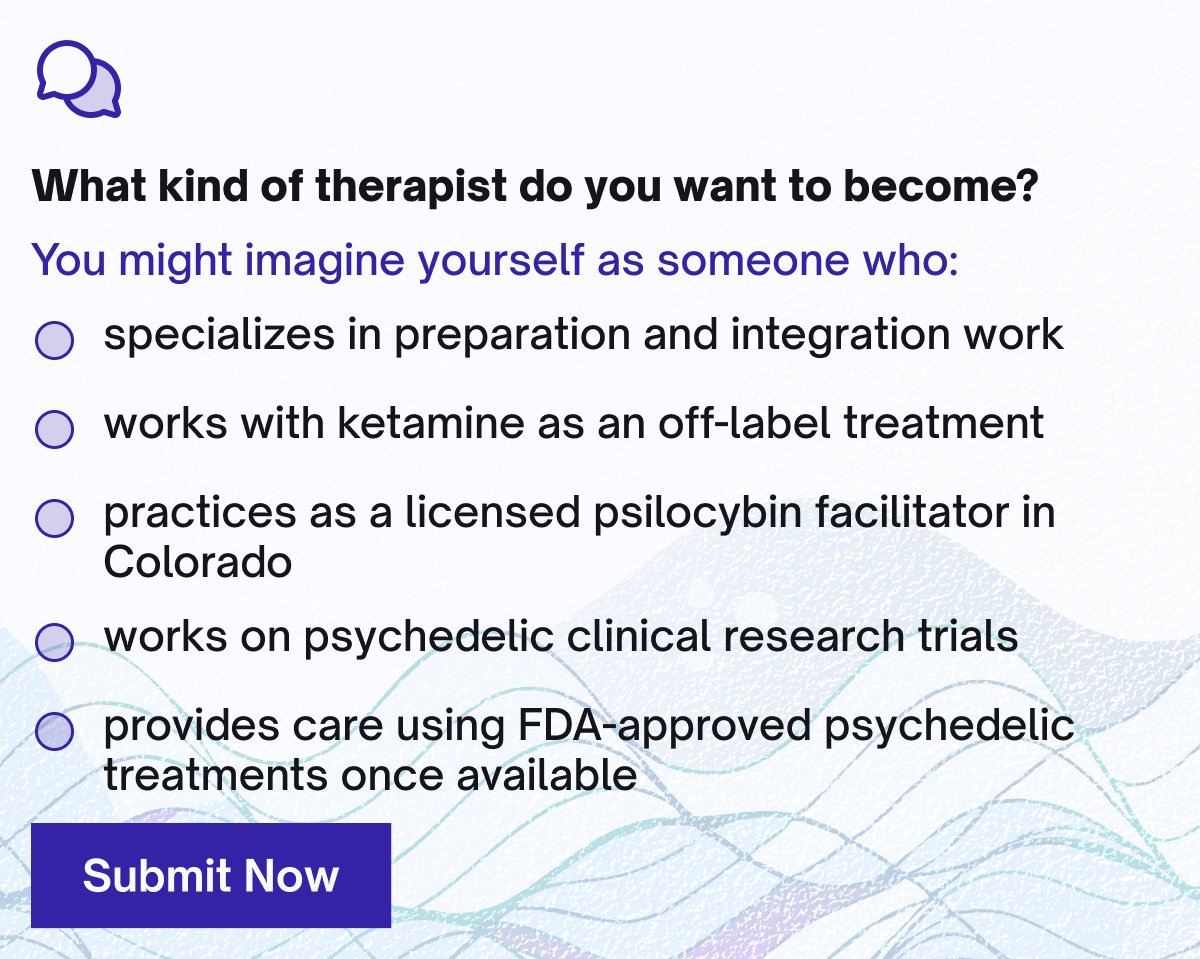 |
If one of the first three paths resonates with you, you can begin right away through Essentials of Psychedelic Therapy, alongside a thoughtful and engaged community of peers. And if you later decide to transition into work with FDA-approved medicines, that training will not be wasted — we anticipate substantial overlap in the core skills and clinical capacities required across these pathways.
If your goal is to work on psychedelic clinical research trials, that’s a meaningful and realistic aspiration as well. These positions can be competitive, but research sites often look for clinicians who have demonstrated sustained interest and preparation through prior training. Fluence sometimes supports drug developers by helping identify clinicians for these roles, including outreach to those who have completed Essentials of Psychedelic Therapy. Once enrolled, you’ll also have access to our trainee Google Group, where we share early announcements and opportunities.
And if you feel called to wait specifically for FDA-approved psychedelic treatments, you’re not alone. While the exact requirements are still evolving, all current signals point toward the importance of strong foundational knowledge. Essentials of Psychedelic Therapy is designed to provide that grounding now, while we continue developing full training pathways tailored to different professional backgrounds and levels of experience.
We’ll be sharing more as these pathways take shape. For now, I invite you to stay connected through this newsletter and our ongoing updates — and to reflect on what kind of clinician you want to grow into as this field continues to grow.
Thanks for reading,
Fluence Co-Founder

We’re pleased to highlight Fluence alumni Rebecca Dempster, PhD, clinical psychologist with more than two decades of experience working at the intersection of trauma, resilience, and mental health across clinical, humanitarian, and organizational settings. Her perspective is shaped by extensive trauma work, from private practice to frontline and crisis-affected environments worldwide. Beyond her work as a mental health professional, a staff wellbeing partner, and a Mental Health and Psychosocial Support (MHPSS) specialist, Rebecca remains connected to Fluence training through her work as an educational content development consultant.
Rebecca shared the following testimonial regarding her choice to train with Fluence: "I chose Fluence for its rigour and commitment to ethical and safe psychedelic practice. Since completing my own training in the Psilocybin Facilitation program, I've begun working with the team developing content for the training programs and it's given me even more respect for what Fluence has to offer. Fluence programs are up-to-date and grounded in research. The program I completed helped me understand how to move forward in this quickly expanding field, and it's a pleasure to contribute to Fluence's continued contribution to the professional development of other clinicians like me."

Curious about training in psychedelic therapy but unsure where to begin?
We’d love to help you gain clarity on how one of our courses fits into your path. Schedule a free 1-on-1 Zoom call with Kabir Cooppan-Boyd, dedicated to guiding you on your learning journey.
During your call, Kabir can answer your questions and explain how our courses connect to professional certificates in:
Psilocybin Facilitation
Ketamine-Assisted Psychotherapy
Psychedelic Harm Reduction and Integration (PHRI)
If you’re a clinician with questions or curiosity about our programs, this personalized conversation is the perfect way to find your best next step.
Schedule your free 1-on-1 Zoom call with Kabir

Start your journey now and move toward certification in Psilocybin Facilitation, Ketamine-Assisted Psychotherapy, or Psychedelic Harm Reduction and Integration at the current, lower rate.
All certificate programs start with our six-week Essentials of Psychedelic Therapy course, with the January cohort taught by Donna Sorgen, LMHC, LPC and Rebecca Love, LCSW.
Certificate Programs

Psilocybin Facilitation
Jan 15, 2025 - Sep 1, 2026

Ketamine-Assisted Psychotherapy
Jan 15, 2025 - May 12, 2026

Psychedelic Harm Reduction and Therapy
Jan 15, 2025 - Jul 13, 2026



VA expands psychedelic therapy trials for PTSD treatment
The U.S. Department of Veterans Affairs is broadening its psychedelic-assisted therapy research, launching new trials for PTSD and depression across nine VA facilities. The expanded effort aims to assess safety and therapeutic outcomes in veteran populations.

Cornell-led study maps how psilocybin rewires brain circuits
Researchers from Cornell University are using innovative techniques involving the rabies virus to better understand how psilocybin alters neural connectivity — insights that could inform future therapeutic applications for depression and mood disorders.

New Jersey considers publicly funded psilocybin research program
Three hospitals in New Jersey are exploring a state-supported research initiative to study the medicinal benefits of psilocybin, signaling growing regional investment in clinical research infrastructure.