


This March I find myself thinking about the role of state licensed facilitator training programs as professional pathways for clinicians.
For clinicians, these kinds of programs, such as those in Oregon and Colorado, raise real and practical questions: Is this something I should pursue? And if so, why?
I think it helps to start with a broader frame. Getting licensed as a facilitator is one option for shaping your career in psychedelic work, but it’s not the only reason to train in a licensure-qualifying program. Some clinicians want to become licensed facilitators and practice in a state-regulated model. Others want a comprehensive educational experience, a professional milestone, a peer group of likeminded colleagues, or a structured way to build competency in a rapidly evolving area of care.
Fluence's licensure-qualifying program in Colorado is an evolution of our original program in Oregon, one of the first programs in the nation to be approved in 2022. We learned a great deal from that work, and Colorado has allowed us to continue refining the model. From the beginning, our approach has been shaped by the best available science and clinical research, while also integrating psychotherapeutic approaches and best practices for safety. That combination matters to me. State systems are evolving quickly, but the need for sound judgment, careful preparation, and respect for the complexity of these experiences does not change. Training should prepare people to think, to relate, and to work responsibly in contexts that can be clinically and emotionally demanding.
One of the things I’m most proud of in this program is the faculty.
Our training staff represents a wide range of backgrounds, including clinical research, community clinical practice, and direct experience as state-licensed facilitators. That mix creates a richer learning environment. It means learners are exposed to multiple perspectives on safety, ethics, preparation, facilitation, and integration. It also means we can speak more honestly about the differences between research settings, clinical practice, and state-regulated models—and help learners understand where these overlap and where they do not.
Now in our fourth year of the program, I’m pleased to welcome Anne Metz, PhD LPC as our Program Director. Anne is a program graduate herself and brings exactly the kind of depth and steadiness this work requires. Her leadership will help us continue to strengthen the program as the field matures. This is an exciting moment for Fluence and for the learners who join us.
For clinicians considering a licensure pathway, I’d encourage a practical and personal reflection.
You may be considering a licensure-qualifying program because you intend to practice in a state system. If so, training is an obvious next step, and it’s worth choosing a program that will not only help you meet requirements, but also help you develop the discernment and relational skills this work demands.
But you may also be considering it for a different reason: because you want to deepen your knowledge and skills in psychedelic care, and you want to do that in a rigorous, structured environment. Many clinicians take this route even when they do not intend to become licensed facilitators. They want to understand the emerging models, strengthen their clinical thinking, and learn from an interdisciplinary faculty. In our experience, that choice is often deeply worthwhile.
We consistently see graduates carry these lessons back into their existing work—as psychotherapists, prescribers, consultants, researchers, and other licensed professionals—within their own scope of practice. The training sharpens how they think about preparation, set and setting, therapeutic relationship, ethics, risk, integration, and the broader systems around care. Even when someone does not pursue state licensure, the learning can still become an important part of how they practice.
State licensure programs are not only creating new practice pathways. They are also creating meaningful opportunities for professional development across the broader mental health and healthcare landscape. If you’re a clinician weighing whether this is the right next step for you, regardless of whether or not your ultimate role is to become a licensed facilitator, my encouragement is think of it as a way to invest in your development.
Thanks for reading,
Fluence Co-Founder
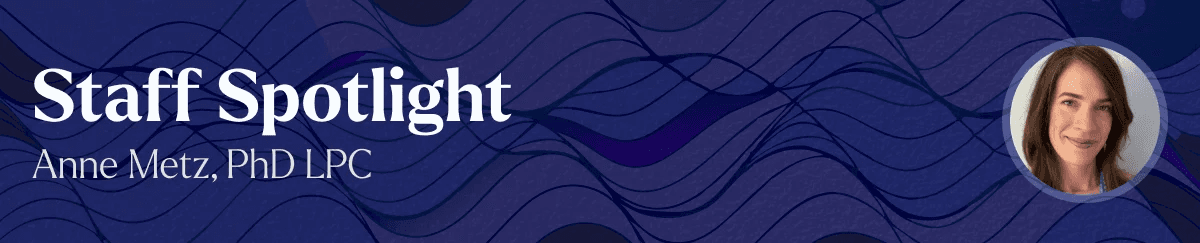
Dr. Anne Metz earned her PhD in Counselor Education and Supervision from James Madison University in 2018. During her doctoral program, she was awarded an interdisciplinary research fellowship at the University of Virginia School of Law in criminal justice reform. Her research and advocacy focus on the decriminalization of mental illness, the end of the War on Drugs, and the therapeutic uses of psychedelics.
Dr. Metz is licensed to practice counseling, psychotherapy, and supervision in multiple states. Early in her career, she worked as a journalist for an alternative weekly paper, and now hosts a public interest podcast on psychedelic therapy called, “The Psychedelic Skeptic.” In her free time, she enjoys downhill skiing and making ceramics.

As psychedelic therapy continues to move from research settings into public policy and real-world implementation, clinicians are navigating an increasingly complex legislative landscape. New state-level programs, evolving regulatory frameworks, and the possibility of future FDA approval all raise important questions about scope of practice, access, ethics, and professional readiness.
This webinar will explore the current and emerging policy environment shaping psychedelic therapy in the United States, with a focus on how therapists can responsibly prepare for what lies ahead. Attendees will gain clarity on how legislation becomes regulation, what uncertainty is inherent in early-stage programs, and how clinicians can stay informed without needing to become policy experts.
In this webinar, we’ll be joined by Taylor West, Executive Director of the Healing Advocacy Fund (HAF), a national nonprofit organization advancing responsible and equitable psychedelic policy. Taylor brings extensive experience from drug policy reform and public advocacy, including prior leadership roles in cannabis policy, and now works at the intersection of legislation, public education, and systems-level change in psychedelics.
A central part of the discussion will focus on the New Mexico psilocybin program, which has recently been established and is currently in the process of regulatory development. We’ll explore what this moment means for clinicians, what questions remain open as the program takes shape, and how therapists can interpret early signals from the implementation process.
The conversation will also look ahead to broader legislative efforts that HAF is tracking across the country, including how state-level psychedelic programs compare to potential FDA approval pathways. Throughout, we’ll emphasize practical orientation: what therapists should be reading, who they should be following, and how to prepare professionally and ethically for a rapidly shifting field.
This conversation will highlight:
Key features and open questions in the New Mexico psilocybin program
How state-level psychedelic legislation typically moves from passage to practice
Differences between state-regulated programs and FDA approval pathways
What therapists can do now to stay informed and professionally prepared
How policy decisions may shape training, access, and clinical roles over time
This session will benefit clinicians, students, educators, and mental health professionals seeking a grounded understanding of psychedelic legislation and its implications for practice.
The webinar will conclude with a live Q&A. A recording will be sent to everyone who registers, so sign up even if you can’t attend live.
Date: March 19, 2026
Time: 1:00 PM ET
Hosted by: Kabir Cooppan-Boyd, Marketing & Communications Manager, Fluence
Special Guest: Taylor West, Executive Director, Healing Advocacy Fund
Format: Live Webinar
Cost: Free with Registration

Curious about training in psychedelic therapy but unsure where to begin?
We’d love to help you gain clarity on how one of our courses fits into your path. Schedule a free 1-on-1 Zoom call with Kabir Cooppan-Boyd, dedicated to guiding you on your learning journey.
During your call, Kabir can answer your questions and explain how our courses connect to professional certificates in:
Psilocybin Facilitation
Ketamine-Assisted Psychotherapy
Psychedelic Harm Reduction and Integration
If you’re a clinician with questions or curiosity about our programs, this personalized conversation is the perfect way to find your best next step.
Schedule your free 1-on-1 Zoom call with Kabir

Start your journey now and move toward certification in Psilocybin Facilitation, Ketamine-Assisted Psychotherapy, or Psychedelic Harm Reduction and Integration at the current, lower rate.
All certificate programs start with our six-week Essentials of Psychedelic Therapy course, with the April cohort taught by Dominique Morisano, PhD.
Certificate Programs

Ketamine-Assisted Psychotherapy
April 21 - Nov 24, 2026



Nature Medicine Publishes Helus Pharma’s Phase 2a Trial of SPL026 in Major Depressive Disorder
Results from a randomized, placebo-controlled Phase 2a trial of the short-acting psychedelic SPL026 demonstrated statistically significant and clinically meaningful reductions in depressive symptoms; this strengthens evidence for psychedelic-informed compounds in mood disorders.

Psychedelic DMT shows promise as depression therapy
A phase II clinical trial led at Imperial College London found a DMT-based psychedelic intervention produced greater reductions in depressive symptoms (vs placebo) when paired with psychotherapeutic support, highlighting therapeutic promise and ongoing clinical exploration.

In a Defining Election Year, MAPS Releases Policy Guidebook to Shape the Future of Psychedelic Reform
The Multidisciplinary Association for Psychedelic Studies (MAPS) published a policy guidebook offering a framework for evidence-based psychedelic policy and reform amidst broad legislative interest.